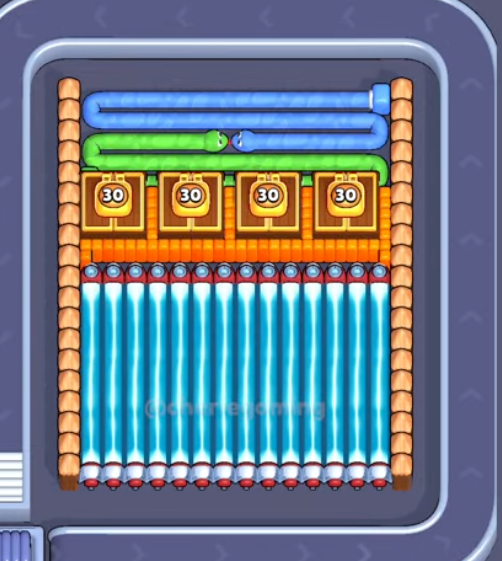
Pixel Flow Level 660 Walkthrough & Level Analysis
Pixel Flow Level 660 Walkthrough & Level Analysis
Honestly, when I reached Pixel Flow Level 660, my first reaction wasn’t
“How do I connect this?”
It was:
“Did this game and I have some unresolved personal beef?”
The screen is packed with dots—like a pair of tangled earphones at 3 a.m, or your life plan when you try to sort it out after midnight.
But hey, since you’re reading this guide, it means we’re the same kind of people: the type who absolutely refuse to bow down to pixel blocks and will grind it out to the bitter end.
Don’t panic. Take a deep breath.
Let me walk you through how to untangle this mess—one logical step at a time.
🚩 Level Overview: The “Hundred Surnames” of the Pixel World
Pixel Flow Level 660 is a classic high-density board.
There are no rage-inducing portals, but the real difficulty lies in its extremely limited maneuvering space.
Key traits:
- A large number of colors (around 7–9)
- Very long connection paths
Hidden danger:
- If even one color starts roaming too freely, the remaining paths will pile up like rush-hour subway passengers—no one gets in, and everything collapses.
🛠️ Breaking the Deadlock: My “Three Survival Rules”
After about 15 failed attempts (and generously contributing three ad views), I finally summarized my personal philosophy for clearing Pixel Flow Level 660.
1️⃣ Survive on the Edges — No Shortcuts Allowed
Many players (including past-me) instinctively choose the shortest line between two points.
In Pixel Flow Level 660, that instinct is a trap.
Strategy:
- Prioritize dots near the edges
- Let long paths snake around the outer border of the board
- Save the center space for short, compact connections
2️⃣ Stick Together — Wasted Space Is Fatal
If you leave a single isolated empty cell in the middle of the board, this run is basically doomed.
Strategy:
- Paths must stay tight
- Even a one-cell gap between two lines can silently block a future color’s only route
In this level, empty space isn’t freedom—it’s a warning sign.
3️⃣ Deal with the Longest Line First
That one color stretching across half the screen—usually dark blue or purple—is the boss of the board.
Strategy:
- Connect it first
- Treat it as your boundary line
Once the boss is settled, the smaller paths can finally breathe.
🧩 Core Step Breakdown for Pixel Flow Level 660
Since I can’t physically draw the paths for you, imagine the logic like this:
Top-left corner handling
There’s usually a color pair tucked tightly into a corner. Lock it in using the most compact L-shape or U-shape possible.The long snake on the right side
The right side often demands a large C-shaped route.
Don’t be afraid of detours—detours are how you create breathing room for the center.The final “fill-in-the-blank” moment
If the last two colors refuse to connect, it’s almost always because one corner turn took one cell too many.
Roll back and push that line closer to the wall.
💡 Tips for You (Especially If You’re About to Lose It)
“If your finger starts swiping wildly across the screen, congratulations—you’ve entered rage mode. This is when mistakes multiply.”
Step back to move forward
Hit a dead end? Don’t just undo one move. Restarting completely is often faster than patching a broken layout.Watch the empty cells
Every cell must be filled. If all colors are connected but the level won’t clear, check for a tiny forgotten corner space.
Post-Clear Self-Assessment
When the screen finally flashes “Level Clear”, that feeling—
doesn’t it feel better than an ice-cold soda after a long day?
If you get stuck on the next level (especially Pixel Flow Level 661, which is somehow even more unhinged), or if you want me to analyze the routing logic of a specific color, just say the word.
We don’t surrender to pixels.
Pixels surrender to logic.